When to Visit Camden Yards
The quick read
Camden Yards is open to the sky, downtown, in a humid mid-Atlantic city. That shapes the whole calendar. April runs chilly and you bring layers. May and June are about as good as it gets. July and August are hot and sticky, with August the hardest to sit through on a day game. September into early October gives you real fall baseball weather, and it is not a low-crowd month just because the calendar turned.
On the demand side, Camden used to be one of the easier tickets in the league. The 2023 and 2024 teams contended and that pushed weekend and marquee dates harder than they had drawn in years. The 2025 club had a down season, so some of that pressure eased. The pattern that holds: weekends and the big AL East opponents draw the most, and a midweek game against a lesser draw is where the value sits.
If you want to fold the trip in with the rest of Baltimore, the Inner Harbor and Federal Hill are a short walk from the gate, and whether you go to a day game or a night game changes how much of the city you get to see.
Verify before you go: weather is a pattern, not a promise, and the demand read shifts year to year. The dated games in the schedule-highlights section reflect one season; check the current Orioles schedule on mlb.com/orioles before you book.
Baltimore weather month by month
Baltimore sits in the humid mid-Atlantic, and the park has no roof, so the weather is part of the seat decision in a way it is not at a domed park. The broad shape of the season:
April. Chilly, sometimes cold at night. Day games can be pleasant in the sun; an evening game in early April can have you reaching for a jacket by the middle innings. Bring layers and do not assume spring means warm.
May and June. The stretch most people would pick if weather is the only thing they are optimizing. Warm days, mild evenings, low odds of the brutal humidity that comes later. If you have flexibility and you want a comfortable night at the ballpark, this is the window.
July and August. Hot and humid, days in the 80s and 90s, and the air does not cool off much after dark the way a drier climate does. August is the most uncomfortable stretch of the summer. A day game in August means direct sun plus mid-Atlantic humidity for three hours, so shade and water matter (the seats section covers which sections stay covered). None of this is a reason to skip it. Summer baseball draws a packed, loud crowd, and plenty of fans would rather sweat through a full house than sit in a quiet April game.
September and early October. Some of the best baseball weather of the year here. The humidity backs off, the evenings cool into comfortable, and the afternoon sun loses its August bite.
Crowds and demand
For a long time Camden Yards was an easy walk-up. Through the lean years you could decide on a weekday afternoon to catch a game that night and have your pick of seats. That changed when the team got good. The 2023 club won 101 games and the AL East. The 2024 club made the postseason. Weekend dates and games against the marquee opponents started drawing the kind of demand the park had not seen in a long while.
Then 2025 was a down year. The team finished under .500, and some of the urgency around tickets softened with it. Current demand is a moving target that depends on how the team is playing the week you go. What stays true: weekends draw harder than weekdays, the big AL East opponents draw harder than the rest of the schedule, and a midweek game against a lesser draw is the value window. If you are flexible on which game, a Tuesday or Wednesday against a non-marquee opponent is where you find room and a softer price.
One thing not to do is assume late season means empty seats. A team in the hunt in September fills the park, and even an also-ran draws a real end-of-season crowd.
Which game to pick
Beyond the weather, the schedule itself splits into two questions that often get mashed together: which games draw a big crowd, and which games actually matter in the standings. They are not the same thing.
The draws. The opponents that fill the park and bring traveling fans are the AL East heavyweights, the Yankees and the Red Sox. Both pull large, loud, partly-visiting crowds, and a weekend series against either is the toughest ticket on the home schedule. The Nationals are a regional draw too: the Beltway Series brings fans up from the DC side, and it is an easy trip for them with the train (the transit section covers the MARC Camden Line from Washington). If a packed, charged building is what you are after, target one of these.
The stakes. Separate from who draws a crowd is who matters in the race. AL East games against the Yankees, Red Sox, Rays, and Blue Jays carry standings and postseason-positioning weight that a midsummer interleague game does not, regardless of how the gate looks. If you want to see a game that means something in the division, that is the axis to watch, and it tightens as September arrives.
For the value-minded, the inverse of the draw list is the answer: a midweek game against an opponent that does not travel well and does not move the standings is the cheapest, calmest way into the park.
Day game or night game
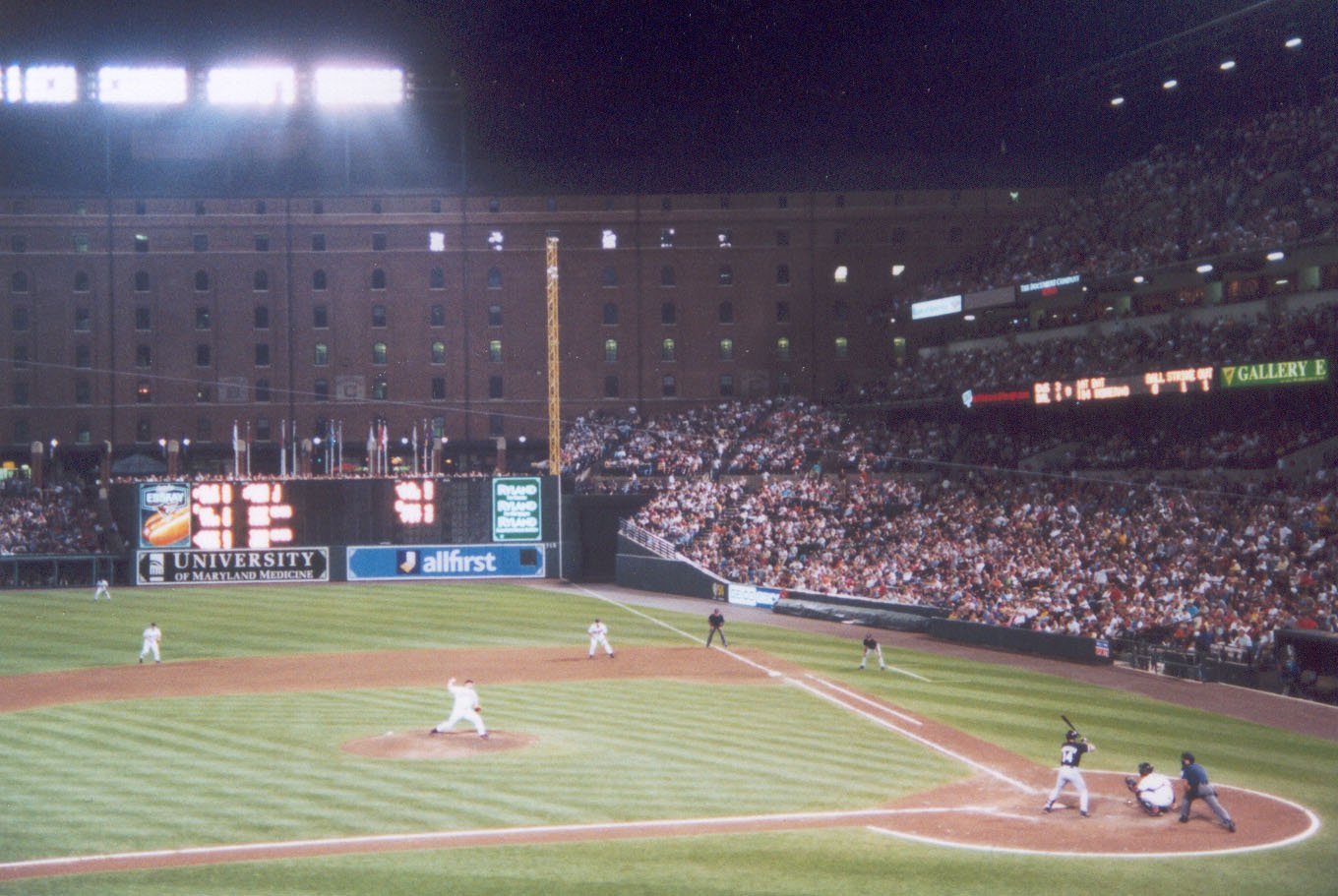
This one trips people up, so get the logic straight before you book. A night game frees your daytime for the rest of Baltimore. First pitch in the evening means you have the whole day for the Inner Harbor, the National Aquarium, Federal Hill, the Babe Ruth Birthplace Museum two blocks from the park, or just walking the waterfront, and then you head to the game. A day game eats those hours. A 1 p.m. first pitch plus the time around it is most of your daylight gone, so if seeing the city is part of the trip, a day game costs you that.
The weather pushes the same direction in summer. A July or August day game is the hottest, most humid way to take in a game here, sun included. The same matchup at night is meaningfully more comfortable. In April and the shoulder months it flips a little: a chilly night game can have you cold by the late innings, and a sunny afternoon is the warmer, easier sit.
So the rough call: if you are also touring Baltimore, lean to a night game and use the day for the city. If the game is the whole point and it is a hot month, night still wins on comfort. A day game makes the most sense in the cool shoulder weeks, or when an afternoon start is simply the only one on the homestand you can make.
This season’s schedule highlights
The dated games here are the ones worth circling on the current home schedule. This is the only part of this page tied to a specific season, so treat the rest as good in any year and check these against the live schedule before you book.
- Yankees and Red Sox home weekends are the marquee draws every year. Set your trip around one of these for the fullest, loudest building, and book early because the weekend dates go first.
- The Beltway Series against the Nationals is the regional draw, an easy one for fans coming up from the DC side on the train.
- Late-September home games carry the most standings weight in a year the team is contending. If a meaningful September series lands at home, that is the one that matters in the race.
If you want help catching a price drop on any of these once the schedule is out, the Bleacher Bound alert tracks Camden Yards ticket prices against your saved dates and opponents. The seats section has the full rundown.
See something out of date at Camden Yards, or know it better than we do? Tell us.